Showing posts with label Randy Lindsay. Show all posts

Sunday, November 11, 2012

Captcha Craptcha! How to remove captcha.


WELCOME!

Welcome everyone to the 
Captcha Craptcha Blogfest of 2012.
and a special welcome to James Van Der Beek
and my co-hosts James Duckett, Randy Lindsay, and Jolene Perry


Photobucket


I'm sure you are familiar with captcha even if you don't know it by that name (AND even if you have no idea who James Van Der Beek is or what he has to do with any of this.) Captcha is defined below* but basically it's those squiggly words and photos of numbers that you are asked to type in to 'verify you are not a robot.'
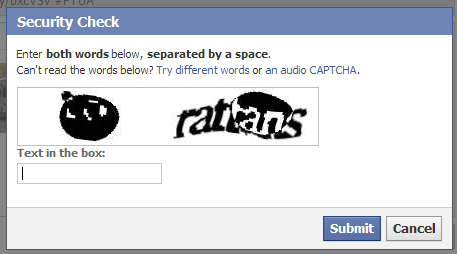


As a new blogger it didn't take me long to realize that this affected whether I would comment on someone's blog or not. It is a hoop that is sometimes too hard (come on, look at that blob above!), impossible (like on mobile phones or when your computer is just being weird), or, let's be honest, I'm feeling too darn lazy to take the extra time.


Then one day it hit me. DO I HAVE THIS ON MY BLOG? Guess what? I did!

But not any more.

And neither should you.


As promised I will help you to remove captcha* from from Blogger

(If you blog with another host I would love to hear about it in the comments.)

BLOGGER:
If you go into your SETTINGS at the bottom of the left side bar you will find that it has a subset of choices. The second choice there is POSTS AND COMMENTS. Choose that one and you should have something that looks like this:


I have scrolled down past POSTS and into COMMENTS.
To remove captcha just go down to SHOW WORD VERIFICATION and say, NO.


JUST SAY NO.

If you want extra security you can do a few things. Under WHO CAN COMMENT you can narrow it down to Registered Users, or only people with Google Accounts, or even only people who are in your GFC. But just know that the more you narrow it down the fewer comments you will get.

Another option is COMMENT MODERATION. If you want to verify all of the comments through your blog you can do that. It really isn't that hard to do and people generally don't mind waiting to see their comments. The only no-no with moderation is to captcha THEN moderate. It feels so redundant.

Then make sure to SAVE SETTINGS in the top right corner.


ONE LAST WORD:

I can't let this go unsaid. Though I love being a hyperbole-kinda person I must admit that there is some good going on with captcha. If you have some time watch this video which illustrates the good and the bad of captcha. (Plus, it's just plain inspirational)


*What the crud is Captcha?
-Wikipedia says: CAPTCHA (play /ˈkæp.ə/) is a type of challenge-response test used in computing as an attempt to ensure that the response is generated by a human being...A common type of CAPTCHA requires the user to type letters and/or digits from a distorted image that appears on the screen. Such tests are commonly used to prevent unwanted internet bots from accessing websites.

Still not convinced?
HERE IS A WHOLE SITE DEDICATED TO HORRIBLE CAPTCHAS
HERE IS A FUNNY FOUR MINUTE VIDEO OF SCOTT STRATTEN HATING CAPTCHA
HERE IS AN INTERESTING ALTERNATIVE TO CAPTCHA (are you a human)

I'm not the only one hating on captcha today.
Pop around to my friends sites below and hear what they have to say about it.
and if you wanna join the fun feel free, the linky will be up all day!

Tuesday, April 10, 2012

Teach & Talk T-day: Randy Lindsay


Guest Post by Randy Lindsay. You can catch him on his blog or twitter.


Film Based Plot and Character Development
by Randy Lindsay


            Hold on a sec. This doesn’t look like my blog.

            Oh, that’s right! I’m guest blogging for the delightsome duo of Shelly and Chad. Whew, I thought I walked into the wrong place. How embarrassing would that have been?

            < Randy looks around the blog and nods his head in approval. >

            I really love how they . . . use plenty of pictures to keep the page vibrant. It sort of figures that Shelly and Chad would each have their own side of the blog. Isn’t that nice that they have “Awesome Stuff” that links to other blogs.

            < Randy looks in the direction of the readers and stops dead. >

            Riiiiight. The guest blogger thing.

            I’m here to discuss movies. If you’ve had a chance to check out my blog you probably noticed that I do movie reviews and frequently post about film related topics. There are some excellent lessons that novel writers can learn from Hollywood about plot and character development.
            Or in other words, this is what I learned about writing from eating popcorn in the dark and watching movies.

            When done correctly, movies are a marvelous platform for storytelling. By necessity, plot and characterization have to be compact because of the limited amount of time that can be devoted to them. This requires a tighter writing discipline than many novel writers have had a chance to develop.
            “Opening Image” is a concept that I have borrowed from Blake Snyder’s Save the Cat. His book is intended to help people craft screenplays, but I believe that most writers can benefit from it. The opening image gives us a quick flash of the hero and the world while setting the tone for the film. This is often done during the credits.
            When applied to novel writing it means that you have a page, or two, to give the reader a glimpse of the overall story. The audience is treated to a visual blast of what the hero normally does, how he normally acts, and the way that people respond to him. You are creating a snapshot of the story.
            Think visually. Picture your protagonist. Then cram the essence of what he does on an average day into a few paragraphs. Once you do this, go back and tighten it up. Make sure the protagonist’s personality shines through. Then tighten it up some more.

            Here are a few examples of successful opening images:


            The Warriors – opens with a view of the neon lights of Coney Island’s Wonder Wheel. The cinematography and the carnival music give an other-worldy feel to the scene. Credits are then interspersed with shots of the members of the Warriors gang on a subway train to Queens. A quick consultation of a subway map on the train shows us that it will be a long way home for these travelers if something goes wrong. A quick bit of dialogue between the Warriors not only reveal their character to the audience but informs us that they will be attending a huge meeting that has been setup by the leader of the biggest gang in New York. Shots of other gangs boarding similar subway trains established the gang-filled landscape of the story and the dark camera work sets the mood.
            By the time the credits have ended the viewer knows exactly what is going on in the story and is ready for the inciting incident. 


(This is one of the snapshots of a rival gang that is displayed during the opening image.)


            Major League 3 – opens with Gus Cantrell pitching a game in a minor league park. He struggles with his pitches and is ejected from the game for cheating.
            That’s it. This is a story about a baseball player at the end of a long career in the minor leagues. The audience is immediately thrown into the casual setting of a minor league ball park where the majority of the story takes place. Bob Uecher provides the sports commentary during the game that tips us off that this will be a comedic look at the topic. And when Gus resorts to the use of a “frozen ball” to strike-out a batter we glimpse the unconventional nature of the hero.
            Once again, in a very short period of time we are ready for the inciting incident.


(This is actually a photo from a scene at the turning point of the story-arc.)


            If you can picture the scene you’re writing the chances are it will come out more vividly to the reader. Once you have an opening image in your head the description, lighting, sounds, and body motions should all translate nicely to the written page and your story will be richer because of it.
            Next time you sit down to watch a movie pay special attention to the first couple of minutes. Watch how Hollywood develops the base story in an incredibly short amount of time. Then take a look at your work-in-progress and see how you can do the same thing for it.


Related Posts Plugin for WordPress, Blogger...